Showing posts with label Quick Tips. Show all posts

18 Mar 2012

Meringue Tips


Meringues are foams that combine stiffly beaten egg whites, sugar and an acid. The consistency of a meringue depends on its sugar content and how it’s cooked, and it can range from soft to chewy to brittle. 

It’s typically a topping for pies, as in lemon meringue pie, but it can also be more cakelike and used as a base for a dish like pavlova.


Some important points to keep in mind when making meringue:

  • Fat interferes with the formation of a good foam, so keep fat away at all costs. Never use a plastic bowl for whipping egg whites. Fat clings to plastic, and no matter how well you’ve cleaned that bowl, chances are some grease remains. Always use a glass or stainless steel bowl for making meringues.

  •  Yolk contains fat, so don’t let even a drop of yolk get in your egg whites. Break your egg whites individually into a separate bowl to ensure each one is clean before you combine them in your larger bowl.
  • Leave the egg whites at room temperature for about half an hour before beating them; cold egg whites don’t beat into a foam as easily.
  • Whip your egg whites into soft peaks before adding the sugar. Adding it in the beginning can double your whipping time. The sugar molecules get in the way of the egg proteins, and it takes longer for the proteins to find each other and form bonds. Ah, that sounds so sweet, doesn’t it?
  •  Why add vinegar? Acid helps avoid lumpiness, loss of water and collapse. Scientifically speaking, by adding acid, you’re adding positively charged particles, or hydrogen ions, that hop onto charged portions of the proteins and leave them uncharged. Electrically neutral proteins are less likely to react with other proteins. In other words, vinegar = good.

12 Mar 2012

Quick Tip: Cutting Onions Without the Tears


The most annoying part about cooking with onions is the eye irritation and resulting tears. Blech.

Here's why: when the onion is sliced, cells are broken, and a compound called propanethial-s-oxide is released as a vapour. When this vapour comes into contact with your peepers, it's converted into a form of sulphuric acid, which produces that stinging sensation and makes your eyes water.

To minimize tears, chill the onion in ice water for half an hour, or in the fridge for a few hours beforehand. Then, work quickly, cleaning the chopped onion off the board often. Once the onion pieces warm up, the waterworks will begin, so vamoose!

Some sources recommend actually cutting the onions underwater, but that seems awkward. They're slippery little buggers even out of water. But if you feel up to it, by all means, give it a go! Please be careful, though.

Also, using a very sharp knife will limit the cell damage, and there will be less vapour released.

You can also try keeping the root in tact while chopping, as it contains the highest concentration of that annoying tear-inducing compound.

If you're not afraid of looking like a complete dork, there are two other suggestions you can try:
  • Wear goggles.
  • Place a slice of bread between your teeth, so it's half sticking out of your mouth. This will supposedly catch the fumes.
  • Even better, stick the bread in your mouth while wearing goggles (and send pictures!).


9ZSPBN6GSRRZ 


8 Mar 2012

Quick Tip: Cutting Soft Cheeses


Soft cheeses like Brie, Camembert or goat’s cheeses are melt-in-your-mouth delicious. They make a great addition to pizzas, grilled cheese sandwiches or as part of a quiche, to name a few applications. But cutting into soft cheeses can be a messy job, and often ends up looking like a clump of soft goo. So what’s a girl to do?

Stick said soft cheese in the freezer for about fifteen minutes before you’re ready to cut it, and presto, you’ve got a harder soft cheese, and great sliceability.

If you’re a cheese purist, however, and are concerned about the short freezing process purging some of its moisture, use a piece of dental floss to slice through. It’s not unlike the wire a cheese monger will use, and will give you a clean cut. Just avoid the mint-flavoured floss...

26 Feb 2012

Quick Tip: How to Make Buttermilk

The addition of buttermilk in baking contributes to leavening and flavour. But who wants to buy a full container of the stuff when your recipe only calls for a cup?

To make your own buttermilk substitute, take 1 tbsp. of plain vinegar and add enough milk to bring you to a cup. Let it sit for ten minutes or so, and it will start to curdle.

Make sure your recipe calls for baking soda, as well, which is required to achieve the leavening effect.

12 Feb 2012

Mushrooms: To Wash or Not to Wash


The age-old question of whether or not to wash these earthy, delectable fungi rages on.

In one camp, there's the conviction that they're little sponges that will absorb water, resulting in bloated, less-flavourful mushrooms. These mushroom purists recommend using a soft brush to wipe them clean so as not to mar their perfect flavour.

Not so, says Team Wash 'Em Real Good. Food scientist Harold McGee investigated the controversy with his characteristic thoroughness in his column for the New York Times a few decades ago. He holds that the amount of water absorbed by a quick rinsing is negligible, and certainly won’t affect flavour.

Members of the mushroom-rinsing camp also point out the health benefits of a little water, in particular that the mushrooms will absorb less oil while cooking.

The Mushroom Council recommends using a soft brush to remove any visible dirt or rinse them quickly and pat them dry. Hmm, well that doesn’t really answer that question.

I suppose when it comes down to it, it’s just a matter of personal preference. But if you do choose to rinse, rest assured that you won’t be ruining your dinner -- McGee found in his experiment that the mushrooms soaked up only about a sixteenth of a tsp. of water each. Mushrooms are 80 to 90 percent water anyway, so what’s an extra sixteenth of a tsp.? The key is a quick rinse, not a soaking.

Personally, I like to peel my mushrooms. Some might object on that grounds that the outer layer is full of nutrients that will be lost using this process. And while that's true, it's a loss I'm willing to accept for a clean, manure-free mushroom. In fact, when cooking with portabella mushrooms, I go so far as to scrape off the gills, which tend to produce a bit of a mess anyway.

For portabellas, remove the stem, then scrape the gills with a spoon prior to peeling. Peel back from the underside up towards the top of the mushroom, section by section, using your hands (as opposed to a peeler).

But if the mushrooms are touch to peel, I’ll wipe them down with a damp paper towel.


7 Feb 2012

The DL on Spaghetti Squash

Spaghetti squash is a fabulous substitute for regular pasta if you’re on a gluten-free or weight-loss diet, or if you’re just looking to be healthy. It’s got a crunchy texture and pleasant flavour, and while I don’t prefer it to pasta, I don’t like it any less. Just the caloric savings alone has me running to the produce aisle oftentimes when I’m making pasta.
  • ·         A one-cup serving of spaghetti squash is 42 calories, versus 190 calories for a cup of cooked whole-wheat pasta and 221 for a cup of cooked regular spaghetti.
  • ·         Spaghetti squash is an excellent source of vitamin A, and a good source of folate. It’s also got lots of vitamin C and potassium.
  • ·         Choose a firm squash with smooth skin and even colour.
  • ·         Its spaghetti-like texture comes only after cooking; it looks like all the rest of its counterparts if you cut through it when raw.
  • ·         An average 4-lb. squash yields about 5 cups of cooked squash.
  • ·         Store it for one month at room temperature, or even longer in a cool dark location (not your refrigerator). For longer storage, the temperature should be between 50 and 60 F.
  • To bake, pierce it several times with a fork or knife to allow the steam to escape. Place it in a baking dish in a 350-F oven for about an hour, or until the skin gives easily under pressure. Allow it to cool for 10 minutes or so, then half it and scoop out its seeds and fibers. Use a fork to scrape out the spaghetti-like strands.

27 Jan 2012

Quick Tip: Cooking with Garlic


Garlic can take a recipe from good to great, but bitter or burnt garlic can ruin it.

A common mistake is to overcook garlic. While many recipes suggest throwing it in with the onion, the onion benefits from a much longer cooking time. Garlic needs but a flash of heat as it burns very easily.

Another mistake is in not removing its centre, which is bitter and kind of nasty. Peel the garlic, and crush it underneath the blade of a substantial knife. Remove the root, or centre, and mince the rest. Then cook it at  fairly low heat for a few minutes at most.

If the root is green, the garlic will be pretty bitter anyway. It's still usable, but not as sweet as fresh garlic.

23 Jan 2012

Quick Tip: Softening Lumpy Brown Sugar

Despite rumours that brown sugar is a "healthier" option, standard brown sugar is simply refined sugar coated in molasses. The molasses causes the crystals to cling together forming soft chunks, which can dry out and form hard lumps. Not fun.

To soften these hard lumps of sweetness, place them in the microwave for 20 to 30 seconds, or until soft. Alternatively, you can seal the lumps in a plastic bag with a piece of fresh bread or a slice of apple for several hours.

14 Jan 2012

Quick Tip: Defrosting Meats in a Hurry

Normally, it's best to thaw meat slowly in the refrigerator. But that can take a long time. Especially if it's a large cut of meat like a roast, which can takes days to defrost.

Another method is to defrost meat in a bowl of ice water, which thaws it much more quickly. Don't use warm or hot water, or leave the meat out at room temperature for extended periods, as those conditions favour microbial growth. And microbes are yucky and dangerous.

13 Jan 2012

Quick Tip: Folding (Baking)


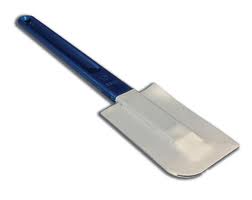
Folding is the process of mixing one delicate ingredient – beaten egg whites, for example – into other, less-delicate ingredients. The objective is to incorporate the mixture without deflating it. The best tool for folding is a large, flexible rubber spatula, and the bigger the bowl, the better. Here’s how it’s done:

Scoop the delicate egg whites, for example, on top of the other ingredients. Cut the spatula through the centre to the bottom of the bowl. Pull the spatula towards you, scraping along the bottom and up the sides. When you pull it out, rotate the spatula so the mixture falls back into the bowl. Now spin the bowl about 90 degrees and repeat until the batter is just incorporated. Don’t overmix.

12 Jan 2012

Quick Tips: Broccoli

Broccoli, a relative of cabbage, is one of those gas-inducing veggies that contains raffinose, a naturally occuring sugar. Choose firm, tight and dark green heads, avoiding stalks with woody edges. If the skin on the stalk is thick, peel it like you would a carrot. The stalk, a part many discard, is actually a very yummy addition to stir-fries, with a milder but still very broccoli-like taste.

As for the buds (the flowery part we're used to), don't cook them too long or they'll get mushy and more sulfrous. It's best to separate the stalks from the bud shoots for cooking, as the stalks take decidedly longer.

Quick Tip: Bain-Marie

Bain-marie is the French term for water bath, or putting a container of food in a shallow pan of warm water, surrounding it with gentle heat that cooks it gradually. This method is typically used for delicate dishes like custards or mousses so they don't break or curdle.

Egg dishes are often cooked this way, too, as the proteins in eggs become tough and rubbery when cooked at high temperatures.

Use a bain-marie for cheesecakes to prevent the top from cracking in the centre, and custards to prevent a crust from forming before the interior is fully cooked. 

Here's the technique in a nut-shell:
Place your container of food in a shallow pan. Fill the pan with boiling water so it reaches halfway up the dish. (If it hasn't reached a boil, it will take too long for the oven to heat it up.) Place in a moderate oven (like 325 F) and don't cover it.

And that's a bain-marie.

11 Jan 2012

Quick Tip: Salting Cabbage

Presalting cabbage for cole slaw reduces its moisture content, creating a less-soggy end product; it also diminishes its bitterness.

Here's what you do: Shred a head of cabbage in your preferred coleslaw shape/size and place it in a colander over a medium bowl, or right in the sink. Sprinkle 1 tbsp. of salt and mix it through with your hands. Leave the cabbage for an hour or so -- don't worry if it looks soggy, that's just the moisture being pulled out. Rinse it in cold water, and dry it thoroughly with a clean dish towel.

10 Jan 2012

Quick Tip: Prevent Clumping Pasta


To prevent your pasta from sticking together, add 1 tbsp. of oil to the boiling water, moving the pasta through the oil as you immerse it. If you don't like the idea of adding oil, wet the pasta before putting it in the water.

Quick Tip: Hard-boiled or Raw Egg?


Can't tell if that egg in your refrigerator is raw or hard-boiled? Here's a simple trick: spin the egg on its side. The hard-boiled egg will spin quickly, like the Tazmanian devil, whereas the raw egg will be sluggish and sad, more like an injured turtle.

8 Jan 2012

Quick Tip: Thickening Pureed Soup

If you need to thicken your pureed soup, add a diced up raw potato or some uncooked white rice and let them cook in the soup to release their starches. Puree the soup again to give your soup more body.

Quick Tip: Fixing Burnt Sauces

If you've lightly burnt your sauce -- of course the best thing to do is make a new one -- but if that's impossible, here's a quick fix: add a small amount of acid into it, such as vinegar or lemon juice. The sour will counteract the bitterness of the burnt flavour.

4 Jan 2012

Quick Tips: Getting Rid of Stuck-On Food

Antacid tablets are for more than just relieving heartburn and indigestion. If your pot has baked-on goop, plop six antacid tablets in and fill it with water. Leave it to sit for an hour, then try and scrub it off. It should come off no problemo.

Quick Tip: Garlic in a Hurry

If you're whipping up a quick guacamole or salsa for your Mexican theme night, and don't have the time to peel and mince garlic (or if you're just a bit lazy like me), here's a quick tip:

Peel and cut the ends off of three heads of garlic.  Make sure they're fresh, so they hold their taste and colour.  Chop it up with a knife or garlic press, then soak the garlic in lemon juice or vinegar (the acid will prevent the chance of botulism forming). Transfer the contents to a tupperware container with a good seal. Add extra olive oil to ensure it's completely submerged. Seal the container and put it in the fridge, and you'll have fresh garlic for months.

3 Jan 2012

Quick Tip: What to Do with Leftover Wine

Leftover wine? Never happens to the Geeks, but if you happen to have some extra, don’t discard it. Pour it into an ice cube tray, freeze and then transfer the wine cubes to a freezer bag. When you need some wine to finish a sauce or add to a stock, there’s no need to open a new bottle.